The Beginnings of Arts and Music in Education
Slavery did exist in Canada, and while the first black communities, the Black Loyalists, settled in Canada after the American Revolutionary War from 1775 to 1783, slavery was only abolished in 1834 after Britain abolished slavery.
Access to education was sparse, and knowledge was passed through oral traditions and social events. Collective knowledge and generational wisdom were passed down through music and stories. Even after slavery was long gone and Canada's black communities fought for their right to education, these cultural sources of knowledge were still highly prominent.
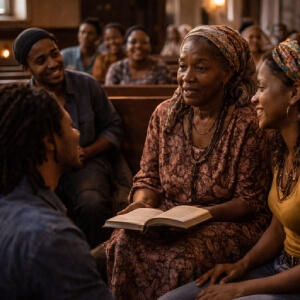
Learning that took place in churches, community centres, and even within family households was critical to holding onto the community identity and exchanging wisdom. These methods of learning were extremely different from the formal mediums taught at schools and educational institutions.
The Importance of Self Expression
Instead of rulebooks, tests, and exams, the knowledge was passed through song, listening to stories from elders, and it was learned through repetition and experience. These forms of education are still far more social and revolve around participation, instead of instruction.
Self expression was the unifying force that drove these educational platforms forward and kept the traditions running for generations. It allowed individuals to absorb the guidance, reflect on the values and lessons taught, and even share their own expressions and opinions. It didn't have the same flaws as institutional education, where keeping to a schedule or running assessments and tests to gauge individual knowledge is used to define skills and potential talents.
Mentorship For Core Guidance
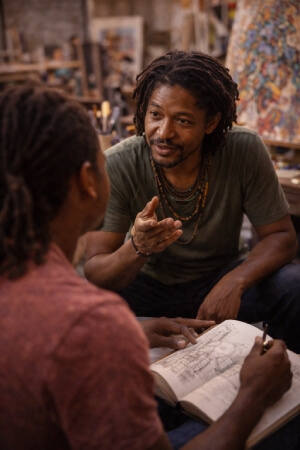
Collective learning has many uses, from opening wide networks to allow knowledge to pass through, all the way to building core social skills and building communities. Mentorship is the practice of educating in more immediate, or even private circles, going beyond the teacher to student or storyteller to listener relationship, and creating a personalized channel for the learner. In creative learning circles, these mentorships are pivotal to paving the road for youth to flourish and find their paths.
These educational channels are not meant to be formal, or structured to a specific means. They are organic relationships that are built between mentor and apprentice, offering guidance and practical advice while also acting as an emotional support. People with an affinity, or even a precocious inclination, to the arts may find it difficult to find their place.
Where can they begin their potential careers, or present their self expressive art if they do not know the place or the time to do so? Their mentors, who can be musicians, artists and performers themselves, can answer these questions and encourage them to discover ways to make their voices heard.
Education That Benefits Mentors and Pupils
But not everyone can be a mentor. Commercial success and fame do not instantly translate to great teaching capabilities. Becoming a mentor is not a destination, but a journey in the role model's own shoes. Through teaching their craft and strengthening the core values of their pupils, they too can learn to reevaluate their own works and expression in a new light.
Mentors are not built by their portfolios, discographies, albums or works. They are also listeners and pupils, who are open to discussion and can sympathize with their students. It is a give and take relationship that creates bonds for life, and passes creative learning skills to the next generations. Education within mentorships is not a one way street, but rather a cyclical flow of wisdom that benefits all.
Workshops Encouraging Collective Learning
Learning in groups is a critical part of creating an inclusive community that fosters originality and emboldens individuals to speak out. The Black community across Canada has grown, developed and spread out, and now it is more important than ever to hold onto community values and create platforms for creative learning. While there are still local traditions that have stood the test of time, nowadays, contemporary solutions are also required to spread the lessons to the greater Black community in Canada.
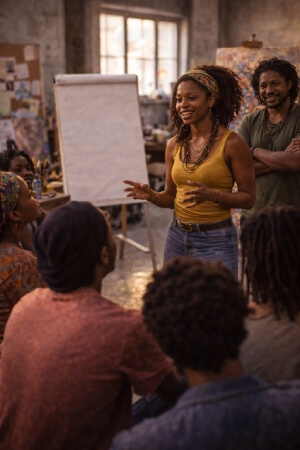
Workshops are the perfect intersection. They not only act as an educational hub for Black Canadians to communicate and learn new skills, but also as a stage for promoting skills and sharing art. Music workshops, dancing lessons, and art sessions help build opportunities for artists and budding young learners alike. Workshops can be the perfect place to learn and teach, and creating networks of these helps make the creative education more accessible to all. It also teaches the value of creation and outside the box thinking, helping nurture young minds that may need the guidance to progress and the self belief to thrive in their passions.
Broadening the Channels and Accessibility
Workshops can only really work if they are accessible. While they can offer great creative outlets within local communities, the goal of the workshops is not to cater to an isolated group of people, or even to only target small demographics. These workshops should open their doors to all, no matter how talented, experienced, or commercially successful an individual may be. The idea is to build community and allow creative learning to reach all those who seek it. Another key word is affordability.
These programs are not profit oriented or poised to only accept Black Canadians who have the financial means to give their children a creative education. It is a place to welcome, share, and give self belief to those who are looking for it. The workshops act as sanctuaries to artists and creators who not only want to refine their trade and learn more, but also those who want to network, and even those who want to give something back to the community and share their wisdom.
Open Dialogue for Self Expression
The arts do not teach directly, it is very much through interpretation and contextual understanding that we can pin the work to the morals and the underlying messages. Controversial art or emotion stirring music demands communication, opening dialogue between artists, admirers and onlookers alike. Rewarding that deep thinking dialogue with safe spaces and eager minds is the best way to spread the messages and explore any associated ideas that people may have. It also gives the works of art a new lease of life, with different contextualizations, greater personalization, and they can be analyzed in alternative social realities.
Open dialogue in itself is an expression of self. We have opinions, viewpoints and interpretations that can be shared with one another. This leads to greater understanding of topics, and it creates a space where individuals feel like they can make their own voices heard. Within Black communities, these points of discussion typically touch on social identity, a sense of belonging, survival, and passing on lived experiences. Open dialogue is also a great medium to open curiosity channels, allowing people to challenge assumptions, give their own narratives, and develop confidence. These are vital to building a healthy and diverse community that values the individual equally as much as the collective.
Building Sustainable Creative Programs
It may be easier to achieve short term success, with limited run initiatives or seasonal workshops. But to carry on the creative education to the next generations, the initiatives must be sustainable. Workshops, mentorship programs, discussions and community building sessions must think in the long term, and plan to form educational programs that can continue to thrive with consistent resources.
Loud and heavily marketed initiatives often outrun themselves and end up getting shelved because they demand too many resources, and require revenue streams to keep going. This is why community led programs are often more fruitful, and can run for a lot longer. They don’t need to invest as heavily, and while they may take more time to build up, they are not in it for the short run.
The other advantage to community driven efforts is that they are also more personal and adaptable. These are based on real life experiences, both contemporary experiences and stories or lessons that have been passed down. They are not limited by imposed frameworks.
When creative programs are sustained, they become more than educational offerings. They become cultural anchors, places where identity is nurtured and community ties are strengthened.
Establishing a Medium for Creative Learning
While the art, music and other creative works are timeless and will be carried on, their messages are open to interpretation, and thus can change as times change and people move on. Works of art that are deeply personal, soulful and meaningful will always represent those values.
But as cultural trends and inclinations change, their message will still resonate, albeit with different interpretations and assessments. This is what makes the arts such a driving force for Black Canadians, as it gives them both a place where they can explore their roots, as well as inspiration to get to where they want to go.
These works must be shared, talked about, and passed on to the next generations, who can take these lessons and carry them on. Lessons that don’t just relate to social or cultural issues, but also carry deeply personal guidance about self belief, confidence, social identity, and collective wisdom.
Significance of the Lessons Taught Through Art
Creative education does not replace formal schooling, but it complements it in powerful ways. It teaches emotional intelligence, cultural awareness, and self belief. Skills that are essential but often undervalued. Within Black communities, these forms of learning have always existed, adapting to circumstance while remaining rooted in tradition.
The next big step is to make these more accessible to the wider communities, and recognize the need for educating the creative minds, and not just the purely academic ones. Creativity and self expression are to be celebrated and admired, and this will only encourage more individuals to contribute with their own shared experiences and lessons.
By recognizing and supporting arts and music as educational tools, we acknowledge their role in shaping confident individuals and connected communities. Learning becomes not just a preparation for life, but a reflection of it, creative, collective, and deeply human.

Today marks the first day of #BlackHistoryMonth. Together, let’s recognize the continued legacy of Black Canadians, who have shaped our past, continue to influence our present, and will inspire future generations. Share a Black Canadian that inspires you below. #BHM2026⬇️ pic.twitter.com/ivG67aEzyQ
— Canada (@Canada) February 1, 2026
1/28 The 1st recorded Black person in Canada was #MathieuDaCosta (1604). He was a linguist who spoke at least 5 languages. His talents helped bridge the gap between European explorers and Indigenous peoples in Canada through translation. pic.twitter.com/5JmBQgbcTx
— MMI_UofT (@MMI_UofT) February 1, 2026