The Necessity for Strong Arts Platforms
Music, visual arts, literature and any other works of art are deeply personal and they require safe environments where like minded people can gather to feel seen, valued, and feel invited to participate. These platforms must be carefully organized and serve as a step for Black artists to join forces and share their works. It is not so much about showcasing art or creating a visual spectacle as much as it is about fortifying a community. People who are seeking role models, mentors, peers, and even potentially business partners who are open to supporting grassroots artists.
The types of collaborations and networking possibilities that occur in these platforms are organic and nurturing. They are not exploitative, unfair, or unjust to Black artists. The very people that open the opportunities are true community members who admire the arts and want to give the artists a platform where they can flourish. Creating these partnerships, with mutual respect and admiration, the community only builds upwards.
Inclusive Participation Built on Trust
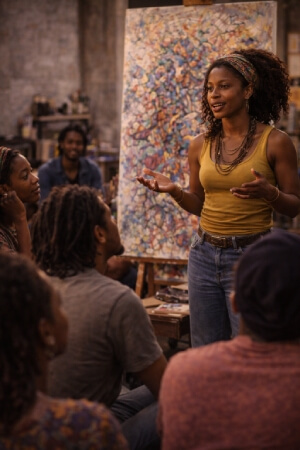
Communities cannot be built without trust. This is a foundational block that cannot be overlooked, only in a fully trustworthy and safe environment can artists bring their sensitive material, and showcase it, in the knowledge that they will be respected and heard. Building trust starts with open mindedness, and a willingness to sympathize with the artist. We all have our own opinions, preferences, and way of life. When we express a belief or a feeling into a work of art, it can be done in many forms. Art is a subjective topic matter, and it can easily prompt negative reactions in the viewer or listener, as it can produce the highest feelings of admiration for aesthetic beauty.
Interpretation is definitely a topic of discussion that can be had with the creators themsleves. It helps both creator and viewer understand how the work is perceived and meant to be perceived. In a trusting environment, this is an extremely healthy way for admirers to step into the shoes of the artist and find new ways to appreciate the works. For the artist, it is the valuable feedback and alternative views that can help them appreciate their own creation in a new light, and serve as an inspiration for their next works.
Healthy Competition and Discussions
Discussion and contemplation is encouraged, but these communities are not designed to create aggressive competition. Competition can be healthy within artist communities, but it can also bring many negative impacts that can hamper progress. If an environment brings too much competition, it can lead create jealousy, rivalries, and diminish the inclusivity of the platforms. Essentially, destroying everything they stand for. It is important for creators and participants to feel like they are not being judged, and that there are no commercial or materialistic expectations tied to the workshops and events.
In its place, the dynamic is one of wander and encouragement. New artists or creators who try their hand in other disciplines are welcomed to take the stage and present their work proudly. This way, they can learn to express themselves, and also to learn about how their work impacts others. It is also a good opportunity for them to stand up for their work, and to listen to all sides of discussions that their peers and audiences may have on their art.
Encouraging Collaborations and Sharing Impressions
Art and talent are wasted when they are not shared, and that is why it is so important to have a strong platform for Black creators in Canada to come together and celebrate their works. These communal spaces do not just invite artists to showcase their work, but they also set the stage for meaningful bonding and potentially even collective collaborations. The latter can come in many forms, from open discussions about the works all the way to real collaborative efforts where artists unite to bring their unique works together and create something new.
Even the smallest and most humble contributions can make major ripples and open the doors to a new collective interpretation or emotional discussions. The interactions at these communities between the artworks and the artists are designed to release the creative juices and strengthen the resolve of the creators. The exchanges can also take the art and move it beyond a gesture of self expression or an individual creation, and turn it into something far more powerful. Adding collective meaning, giving purpose, and acting as a source of inspiration are some of the most lasting impacts a creation can make.
Drawing Inspiration from Collaborations
Visual art can draw inspiration from storytellers, musicians can collaborate and create fusion pieces or explore new territory, and literary works can take effect on individuals to give them a deeper connection to their own emotions. Art is the best inspiration for self expression, as it adds more context or injects new elements into us. Elements that can invoke our own creativity, and inspire us to want to create. Artists can just as easily inspire as they can draw inspiration from these community led events.
Writers, artists, musicians and creators have all come across writer's block, or mental blocks that impede their own creativity. Trying too hard to create can often lead to artists making work that they are unhappy with, or don't feel really speak to their abilities. But this can also be turned into a source of inspiration, as it explores values that are deeply human and all creators have experienced. The artists may find their answer from the collective understandings and discussions that follow these works, giving them an idea of how to deal with these blocks and turn the perceived shortcomings into a strength.
Shared Ownership In Tight Communities
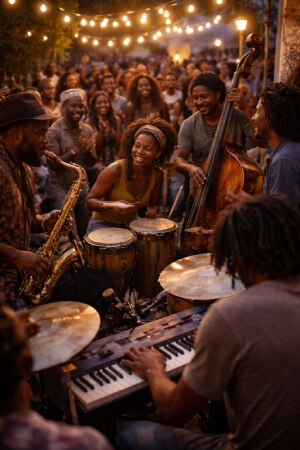
Not all art is meant to be hanged in the Louvre, win Nobel prizes, or have massive commercial success. There are artforms and creations that are not purpoted for material gains, but as an expression to share with the communities themselves, and help them flourish. Works that are not owned by one artist, or not formally assigned to one person, but owned by the collective, create a sense of community. The people that are part of the community can feel a sense of belonging, participation, and draw a sense of purpose from these forms of art. They resonate on a deeply personal level, yet they are shared by a tight knit community.
Community art and works are highly cherished, and more likely to be protected, cared for, shared, and also grow. It is more of a concept, than a single work of art that can be taken from one community and placed into another. These works are also very often open to interpretation and sharing. People can freely share their opinions, contribute to the art, and help it to make it grow for the community.
What Art Has Shared Ownership
The idea of art that is shared by communities may be a difficult one to imagine for people who are not familiar with it. But a lot of the art forms of today did not start out with direct ownership or with someone holding the exclusive rights to them. For instance, music genres such as DJing, early hip-hop, Caribbean sound system culture, and all the way back to Call and response music formats were owned by the collective. Graffiti art is also another type of art that is generally not exclusively owned by one person. It is not about copyright or material ownership by an individual, but instead a cultural authorship that invites more people to carry on the movement.
Jazz is one of the best examples of a collective language among musicians. Standards are shared between different authors, musicians constantly reinterpret the same compositions, and the improvisational nature of actually performing jazz music makes it virtually impossible for a single entity to own every single rendition of the music. It is not meant to be either. These art forms are designed to unite the people who are in the right place at the right time, giving them a sense of the collective and enjoying the works as they are happening. In many forms of collective art, participation is also encouraged, giving the audience a point of access and a chance to enjoy the art as they become a part of it.
Creating Foundations for Lasting Cultural Impacts
Cultural impact is not created overnight, nor is it measured solely by attendance numbers, visibility, or external recognition. Its true strength lies in continuity. When communal arts spaces are built with care, trust, and shared values, they become foundations rather than temporary initiatives. These foundations allow culture to be practiced consistently, passed down organically, and reshaped by each generation that engages with it.
Within Black communities in Canada, lasting cultural impact often comes from repetition and presence. The same spaces hosting discussions, performances, and exhibitions over time become familiar and dependable. They evolve into places people return to, not just to experience art, but to reconnect with one another. These spaces help preserve cultural memory while remaining flexible enough to reflect contemporary realities and new voices.
Strong foundations also create pathways. They give emerging artists a place to start, established creators a place to give back, and audiences a place to belong. When these elements align, culture is no longer reactive or fragile, but rooted and sustainable.
Communal Spaces as Living Cultural Institutions
Unlike traditional institutions, communal arts spaces are living entities. They grow, adapt, and respond directly to the people who shape them. Their strength comes from participation rather than permanence, and from shared responsibility rather than rigid structure.
These spaces do not dictate how art should be created or consumed. Instead, they allow expression to unfold naturally, guided by mutual respect and collective intent. Over time, they become cultural reference points. In that they become places where stories are exchanged, ideas are tested, and identity is reinforced.
By nurturing communal spaces for belonging and expression, Black communities in Canada continue a long-standing tradition of using art as a unifying force. These spaces ensure that creativity remains accessible, meaningful, and deeply connected to the people it represents. Art, in this context, is not just something to observe, but something to participate in, protect, and carry forward together.

Today marks the first day of #BlackHistoryMonth. Together, let’s recognize the continued legacy of Black Canadians, who have shaped our past, continue to influence our present, and will inspire future generations. Share a Black Canadian that inspires you below. #BHM2026⬇️ pic.twitter.com/ivG67aEzyQ
— Canada (@Canada) February 1, 2026
1/28 The 1st recorded Black person in Canada was #MathieuDaCosta (1604). He was a linguist who spoke at least 5 languages. His talents helped bridge the gap between European explorers and Indigenous peoples in Canada through translation. pic.twitter.com/5JmBQgbcTx
— MMI_UofT (@MMI_UofT) February 1, 2026